In a world saturated with information, capturing attention is an ongoing battle. We’ve mastered the art of conveying messages through text and static images, but the game is changing. Enter immersive visuals, a powerful combination of technologies designed to transport audiences directly into the heart of an experience.
Forget simply looking at something; immersive visuals invite you to step inside it. This shift from passive observation to active participation is transforming everything from entertainment to education and marketing.
What Makes Visuals Immersive?
Immersive visuals are characterized by several key elements that collectively create a sense of being ‘present’ within a digital environment:
- High Fidelity: Crisp resolutions (think 4K, 8K, and beyond), vibrant color gamuts, and high dynamic range (HDR) are crucial. When pixels become nearly invisible and colors mirror reality (or perhaps a carefully crafted, hyper-real alternative), the boundary between the screen and the real world blurs.
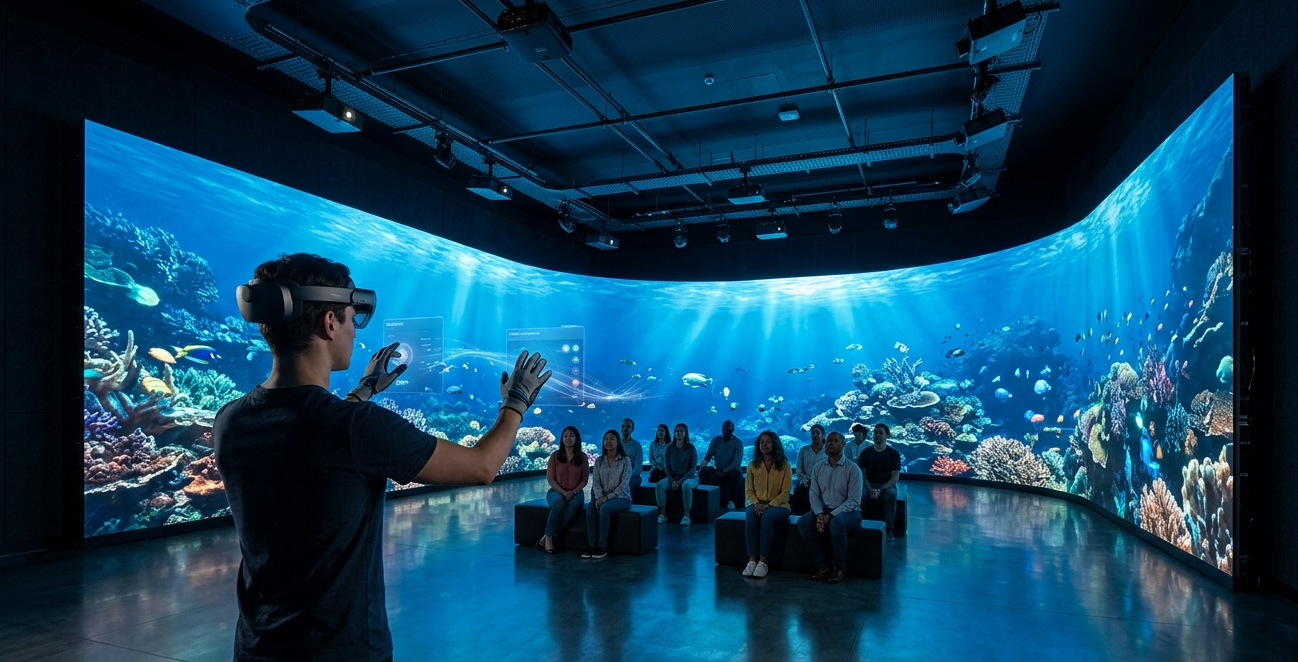
- Expansive Field of View: Our natural vision spans a wide arc. Immersive experiences, particularly in VR, mimic this by utilizing headsets or massive, curved screens that fill our peripheral vision. This “wraparound” effect places the viewer firmly at the center of the action.
- Depth and Dimension: Technologies like stereoscopic 3D and holographic projections create an illusion of depth, making objects feel tangible and spaces feel real. This spatiality is key to navigating and interacting with virtual environments.
- Interactivity and Responsiveness: Crucially, true immersion isn’t a one-way street. In VR and AR, user input translates instantly into changes in the visual landscape. Looking around, reaching out to “touch” an object, or manipulating elements within the virtual space cements the illusion of reality. Head-tracking is perhaps the most fundamental element here, ensuring that as you turn your head, the visual perspective shifts seamlessly to match.
The Technologies Powering the Revolution
The engine driving this revolution is a convergence of powerful hardware and sophisticated software:
- Virtual Reality (VR): This is the flagship of immersion. Head-mounted displays (HMDs) completely replace the user’s view of the physical world with a digitally generated environment. From gaming and architectural visualization to therapy and simulation training, VR offers the deepest level of visual immersion available today.
- Augmented Reality (AR): Instead of replacing the real world, AR overlays digital content onto it. Think Pokémon GO or the ability to visualize new furniture in your living room using your smartphone camera. AR makes the physical world interactive and information-rich, blending the digital and physical realms seamlessly.
- Extended Reality (XR): This is the umbrella term encompassing VR, AR, and Mixed Reality (MR), which sits somewhere in between. MR allows real and virtual objects to interact in real-time.
- Volumetric Video and 3D Assets: Traditional video is flat. Volumetric video captures scenes from multiple angles, allowing viewers to “move around” the subject and see them from any perspective. Combined with highly detailed 3D models created using photogrammetry and scanning techniques, these assets form the building blocks of believable virtual worlds.
The Impact: Where Immersion Changes the Game
The power of immersive visuals lies in their ability to evoke a deep emotional response and create memorable experiences. This has profound implications across diverse industries:
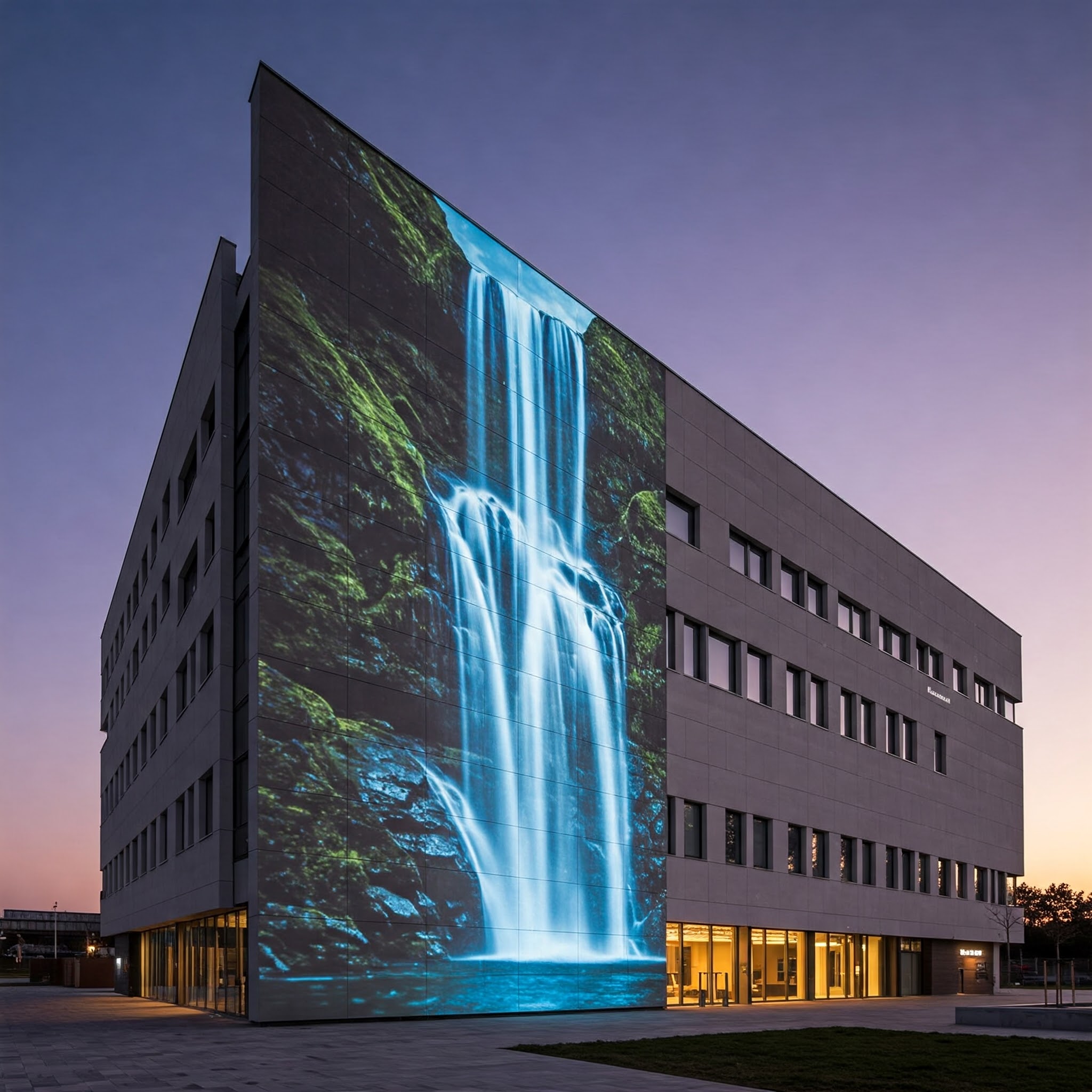
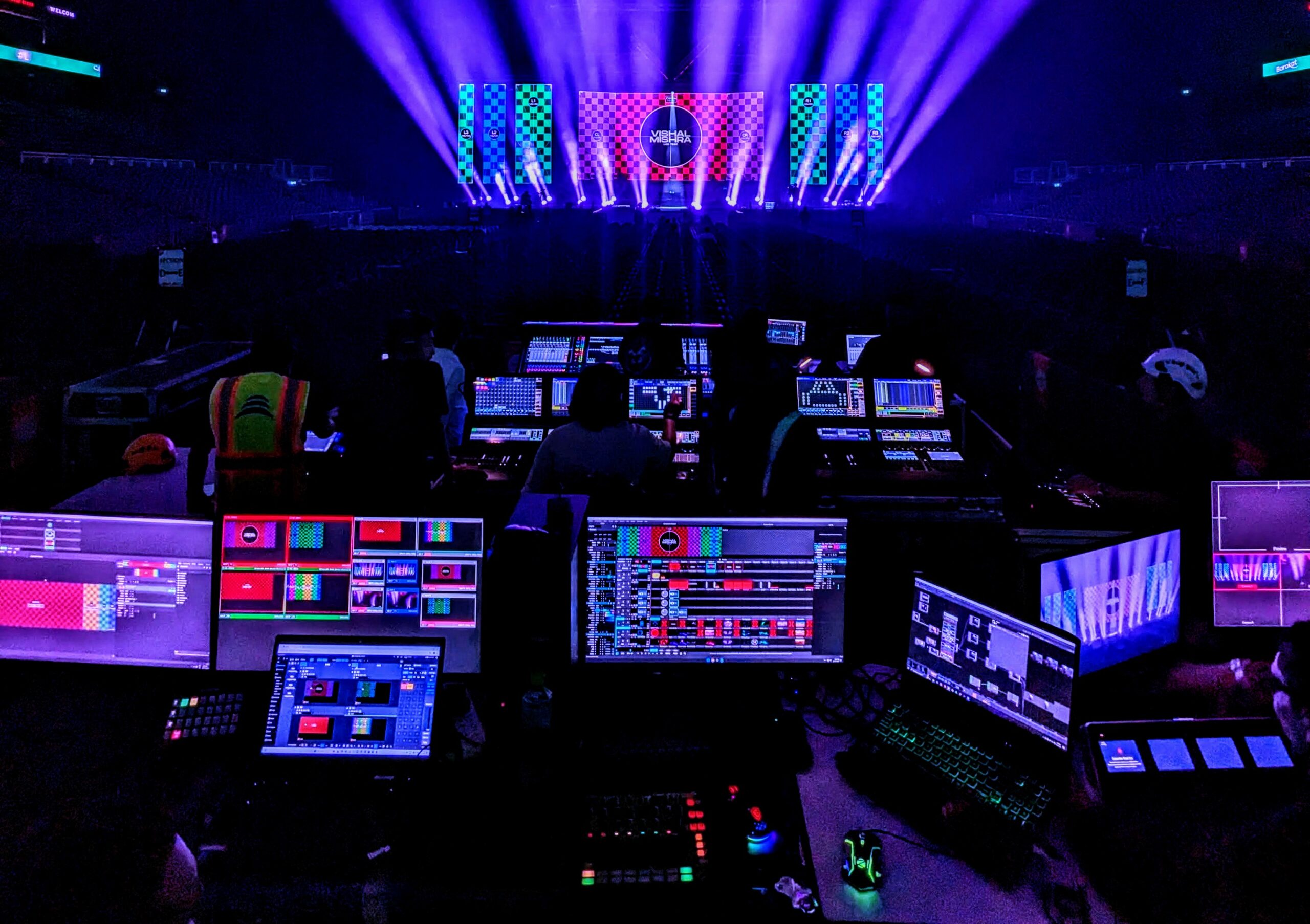
- Entertainment: Immersive experiences are already transforming gaming, transporting players directly into fantastical realms. But the impact extends to live events, where massive LED screens and projection mapping create stunning backdrops, and to filmmaking, with techniques like virtual production using large LED volumes redefining how movies are made.
- Education and Training: Imagine learning about ancient Rome by walking through its streets or practicing complex surgery in a risk-free virtual environment. Immersive visualizations make learning intuitive, engaging, and highly effective, improving knowledge retention and skill acquisition.
- Architecture and Design: Architects can now offer clients virtual walkthroughs of buildings before they’re built, allowing for immediate feedback and design adjustments. AR apps can help interior designers and furniture retailers show clients how products will look and fit in their homes.
- Marketing and Retail: Brands are leveraging AR and VR to create interactive ad campaigns and try-on experiences. Imagine “trying on” makeup virtually or test-driving a car from the comfort of your living room. Immersive visuals create a level of engagement and “try-before-you-buy” confidence that traditional marketing simply can’t match.
- Health and Wellness: VR is being used effectively in exposure therapy to treat phobias and PTSD, as well as for pain management and cognitive rehabilitation.
The Future is Now: What’s Next for Immersive Visuals?
The field of immersive visuals is rapidly evolving, with several exciting trends on the horizon:
- Foveated Rendering: This technique uses eye-tracking to render only the area the user is actively looking at in full detail, significantly reducing the processing power required for high-fidelity VR.
- Haptic Feedback: While visual-focused, immersion benefits hugely from realistic tactile sensations. Advanced haptic gloves and suits are in development, enabling users to “feel” virtual objects.
- Cloud Rendering: Offloading the heavy lifting of rendering to powerful servers in the cloud could make high-quality AR and VR accessible on lighter, more affordable devices.
- Holographic Displays: True glasses-free holographic displays are still emerging but hold the promise of bringing convincing 3D visuals directly into our physical spaces.
Conclusion
Immersive visuals are far more than just a technological curiosity. They represent a fundamental shift in how we create, consume, and interact with digital content. By bridging the gap between imagination and reality, they are unlocking new possibilities for storytelling, education, collaboration, and commerce. As the underlying technologies become more powerful, accessible, and integrated, we are only beginning to scratch the surface of how immersive visuals will continue to redefine our perception of the world around us. So, get ready to step beyond the screen – the future of reality is immersive.

Leave A Comment